Pile Driving Equipment Guide: Solar, Pneumatic, and Excavator Mounted Systems
What Is Pile Driving Equipment?
Pile driving equipment is used to install piles—long structural elements made of steel, concrete, or timber—into the ground. These piles support structures by distributing weight safely into deeper soil layers.
The process typically involves applying force to the top of the pile using impact, vibration, or pressure until it reaches the required depth or resistance level.
Types of Pile Driving Equipment
1. Solar Pile Drivers
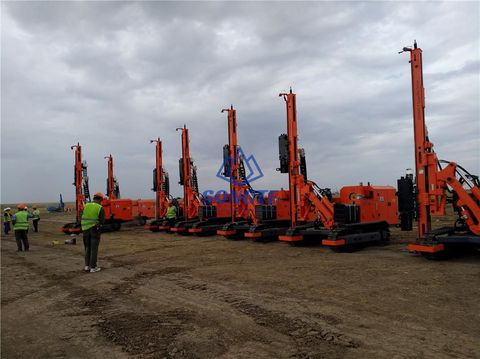
Solar pile drivers are specialized machines used primarily in solar farm installations. They are designed to drive piles that support solar panel mounting structures.
Key Characteristics:
- Often automated or semi-automated
- Designed for repetitive, large-scale installations
- Compatible with GPS and alignment systems
Applications:
- Solar power plants
- Renewable energy projects
- Large open-field installations
2. Pneumatic (Air-Powered) Pile Drivers
Pneumatic pile drivers use compressed air to generate force. They are commonly used in situations where electric or hydraulic systems may not be ideal.
Key Characteristics:
- Powered by air compressors
- Lightweight compared to hydraulic systems
- Suitable for remote or constrained environments
Applications:
- Small to medium construction projects
- Remote locations with limited power supply
- Maintenance or repair work
3. Excavator Mounted Pile Drivers
These systems attach directly to excavators, turning them into versatile pile driving machines.
Key Characteristics:
- Uses the excavator’s hydraulic system
- High mobility and flexibility
- Can handle various pile sizes
Applications:
- Urban construction
- Road and bridge projects
- General foundation work
Benefits and Limitations
Benefits
| Feature | Solar | Pneumatic | Excavator Mounted |
|---|---|---|---|
| Efficiency | High for repetitive tasks | Moderate | High |
| Mobility | Moderate | High | Very High |
| Power Source | Engine/electric | Compressed air | Hydraulic |
| Automation | High | Low | Medium |
General Advantages:
- Improved construction speed
- Better foundation stability
- Adaptability to different terrains
- Reduced manual labor
Limitations
| Limitation | Solar | Pneumatic | Excavator Mounted |
|---|---|---|---|
| Initial Cost | High | Low | Medium to High |
| Noise Levels | Moderate | High | High |
| Precision | High | Moderate | High |
| Maintenance Needs | Moderate | Low | Moderate |
Common Challenges:
- Noise and vibration concerns
- Equipment wear and tear
- Dependence on site conditions
Key Features to Consider
When evaluating pile driving equipment, several features can influence performance and suitability:
1. Driving Force
Measured in terms of impact energy or hydraulic pressure, this determines how effectively the machine can drive piles into dense soil.
2. Compatibility
Ensure the equipment can handle the type and size of piles required for your project.
3. Mobility
Projects in tight or uneven spaces benefit from highly mobile systems like excavator-mounted drivers.
4. Automation and Control
Advanced systems may include GPS alignment, remote control, or automated depth control.
5. Power Source
- Solar and hybrid systems for sustainability
- Pneumatic systems for remote areas
- Hydraulic systems for heavy-duty work
Latest Trends and Innovations
The pile driving industry has seen several advancements in recent years:
Automation and Smart Controls
Modern machines are increasingly equipped with digital monitoring systems that improve accuracy and reduce operator error.
Eco-Friendly Solutions
Solar-powered and low-emission equipment are gaining popularity, especially in renewable energy projects.
Noise and Vibration Reduction
Manufacturers are focusing on reducing environmental impact through quieter and less disruptive systems.
Modular Attachments
Excavator-mounted systems now offer interchangeable attachments, increasing versatility across different tasks.
Top Companies and Solutions
Several well-known companies manufacture pile driving equipment and related systems:
- Caterpillar Inc.
- Komatsu Ltd.
- Liebherr Group
- Junttan Oy
- ABI Equipment Ltd
These companies offer a range of solutions, from heavy-duty hydraulic systems to specialized solar pile drivers. Comparing specifications such as driving force, compatibility, and automation features can help identify the most suitable option.
How to Choose the Right Pile Driving Equipment
Selecting the right system depends on multiple factors:
Project Type
- Solar farms → Solar pile drivers
- Urban construction → Excavator-mounted systems
- Remote or small projects → Pneumatic drivers
Soil Conditions
- Dense soil requires higher impact or hydraulic force
- Loose soil may allow lighter equipment
Budget Considerations
- Balance initial cost with long-term efficiency
- Consider maintenance and operational costs
Equipment Availability
- Check local availability and service support
- Ensure spare parts and maintenance services are accessible
Comparison Checklist
Use this checklist when evaluating options:
- Type of project and scale
- Soil conditions and depth requirements
- Required pile size and material
- Mobility needs on site
- Availability of power source
- Budget and operating costs
- Safety and environmental considerations
Tips for Best Use and Maintenance
Proper use and maintenance can extend equipment life and improve performance:
Operational Tips
- Ensure proper alignment before driving piles
- Monitor equipment performance regularly
- Avoid overloading beyond capacity
Maintenance Tips
- Inspect components for wear and damage
- Keep moving parts lubricated
- Maintain air compressors or hydraulic systems
- Follow manufacturer guidelines for servicing
Frequently Asked Questions (FAQs)
1. What type of pile driver is best for solar projects?
Solar pile drivers are specifically designed for such applications, offering efficiency and precision for repetitive installations.
2. Are pneumatic pile drivers suitable for heavy-duty work?
They are generally better suited for light to medium tasks. Heavy-duty projects often require hydraulic or excavator-mounted systems.
3. Can one machine handle different pile types?
Some systems, especially excavator-mounted ones, can handle multiple pile types with the right attachments.
4. How important is soil testing before pile driving?
Soil testing is essential to determine the appropriate equipment and driving force required.
5. What are the main safety concerns?
Noise, vibration, and equipment handling are key concerns. Proper training and protective measures are necessary.
Conclusion
Pile driving equipment is a foundational element in construction and infrastructure development. Solar, pneumatic, and excavator-mounted systems each serve specific purposes and offer unique advantages.
Understanding their working principles, strengths, and limitations helps in selecting the most suitable option for a given project. With ongoing advancements in automation and sustainability, modern pile driving equipment continues to improve in efficiency and environmental impact.
Choosing the right system ultimately depends on project requirements, site conditions, and long-term operational considerations. A well-informed decision can lead to better performance, reduced costs, and more reliable structural foundations.