Solar Powered Street Lighting Systems: A Practical Guide to Types and Applications
What Are Solar Powered Street Lighting Systems?
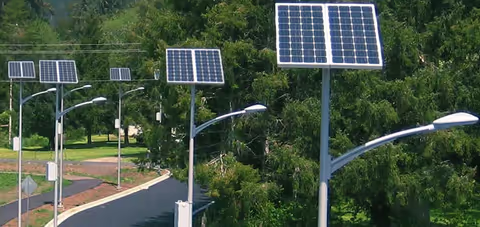
Solar street lighting systems are standalone lighting setups that use solar panels to capture energy from the sun. This energy is stored in batteries and used to power LED lights after sunset.
A typical system includes:
- Solar panel
- Battery storage unit
- LED light fixture
- Controller (for managing charging and lighting cycles)
- Mounting structure or pole
These systems operate independently of the electrical grid, making them suitable for both urban and remote environments.
Working Principle
The operation of a solar street light follows a simple cycle:
- During the day, solar panels absorb sunlight and convert it into electrical energy
- The energy is stored in batteries
- At dusk, the controller activates the LED light
- The stored energy powers the light throughout the night
- At sunrise, the system switches off and begins recharging
Many modern systems include sensors to adjust brightness based on motion or ambient light levels.
Types of Solar Street Lighting Systems
Solar street lights are available in different configurations depending on design and application.
1. All-in-One LED Street Lights
These systems integrate all components—solar panel, battery, and LED light—into a single unit.
Features:
- Compact design
- Easy installation
- Minimal wiring
Applications:
- Residential areas
- Small roads
- Pathways
2. Split Solar Street Lights
In this design, the solar panel and lighting fixture are separate components.
Features:
- Flexible positioning
- Better performance in varying sunlight conditions
Applications:
- Highways
- Large open areas
3. Pole-Mounted Solar Street Lights
Mounted on poles, these are commonly used for road and street lighting.
Features:
- Standardized installation
- Suitable for public infrastructure
Applications:
- Urban streets
- Rural roads
4. Portable Solar Street Lights
These are movable units used for temporary or emergency lighting.
Features:
- Lightweight
- Easy to relocate
Applications:
- Construction sites
- Events
- Disaster relief
5. Solar Parking Lot Lights with Motion Sensors
Designed for large parking areas, these systems often include motion detection to conserve energy.
Features:
- Energy-efficient operation
- Enhanced security
Applications:
- Commercial parking spaces
- Industrial zones
6. Solar Security Street Lights
These lights are optimized for safety and surveillance.
Features:
- Bright illumination
- Motion detection
- Extended runtime
Applications:
- Residential complexes
- Public spaces
Benefits and Limitations
Benefits
| Feature | Description |
|---|---|
| Energy Independence | Operates without grid electricity |
| Cost Savings | Reduces long-term energy costs |
| Environmentally Friendly | Uses renewable energy |
| Easy Installation | Minimal wiring required |
| Low Maintenance | Fewer moving parts |
Limitations
| Limitation | Description |
|---|---|
| Initial Cost | Higher upfront investment |
| Weather Dependence | Performance depends on sunlight availability |
| Battery Lifespan | Batteries require periodic replacement |
| Limited Power Output | Not suitable for extremely high-intensity lighting |
| Space Requirement | Needs adequate sunlight exposure |
Key Features to Consider
When evaluating solar street lighting systems, consider the following:
1. Solar Panel Efficiency
Higher efficiency panels generate more energy, especially in limited sunlight conditions.
2. Battery Capacity
Determines how long the light can operate during the night or cloudy days.
3. LED Brightness
Measured in lumens, this affects visibility and coverage area.
4. Controller Technology
Advanced controllers improve energy management and extend battery life.
5. Durability
Weather-resistant materials ensure long-term performance in outdoor conditions.
Latest Trends and Innovations
Smart Lighting Systems
Modern solar lights include sensors and remote monitoring for better control and efficiency.
Motion Sensor Integration
Lights adjust brightness based on movement, conserving energy when areas are unoccupied.
Improved Battery Technologies
Lithium-ion and lithium iron phosphate batteries offer longer life and better performance.
Hybrid Systems
Some systems combine solar power with grid backup to ensure consistent operation.
Top Companies and Solutions
Several manufacturers offer solar street lighting systems with varying features:
- Philips Lighting (Signify)
- Tata Power Solar
- Havells India
- Sunna Design
- Greenshine New Energy
These companies provide a range of products for residential, commercial, and industrial applications. Comparing specifications such as battery life, brightness, and warranty can help users evaluate options.
How to Choose the Right System
Selecting the appropriate solar street lighting system depends on several factors:
Application Type
- Residential → All-in-one systems
- Highways → Split or pole-mounted systems
- Parking areas → Motion sensor-based lights
Location Conditions
- Areas with consistent sunlight perform better
- Shaded areas may require higher capacity systems
Budget Considerations
- Balance initial cost with long-term savings
- Consider maintenance and replacement costs
Selection Checklist
- Identify lighting requirements (brightness, coverage)
- Evaluate sunlight availability
- Choose appropriate battery capacity
- Consider installation and maintenance needs
- Check durability and weather resistance
Comparison Table
| Feature | All-in-One | Split System | Portable |
|---|---|---|---|
| Installation | Easy | Moderate | Very Easy |
| Flexibility | Low | High | Very High |
| Cost | Moderate | Higher | Variable |
| Maintenance | Low | Moderate | Low |
| Applications | Small areas | Large areas | Temporary use |
Tips for Best Use and Maintenance
Installation Tips
- Position solar panels for maximum sunlight exposure
- Avoid shaded areas
- Ensure proper mounting for stability
Maintenance Tips
- Clean solar panels regularly
- Inspect batteries and replace when needed
- Check wiring and connections
- Monitor system performance periodically
Frequently Asked Questions (FAQs)
1. Do solar street lights work during cloudy days?
Yes, they can operate using stored battery power, but performance may be reduced if sunlight is limited for several days.
2. How long do solar street lights last?
Most systems last several years, with batteries typically needing replacement after a few years.
3. Are solar street lights suitable for highways?
Yes, but they require high-capacity systems with sufficient brightness and battery storage.
4. Do they require regular maintenance?
Maintenance is generally low but includes cleaning panels and checking batteries.
5. Can solar street lights replace traditional lighting completely?
In many cases, yes, especially in areas with adequate sunlight and proper system design.
Conclusion
Solar powered street lighting systems offer a practical and energy-efficient solution for modern outdoor lighting needs. By using renewable energy, they reduce dependence on conventional power sources while supporting sustainable development.
Understanding the different types, features, and applications helps users choose systems that match their requirements. While there are some limitations, advancements in technology continue to improve performance and reliability.
With careful selection, proper installation, and regular maintenance, solar street lighting systems can provide consistent and efficient illumination across a wide range of environments.